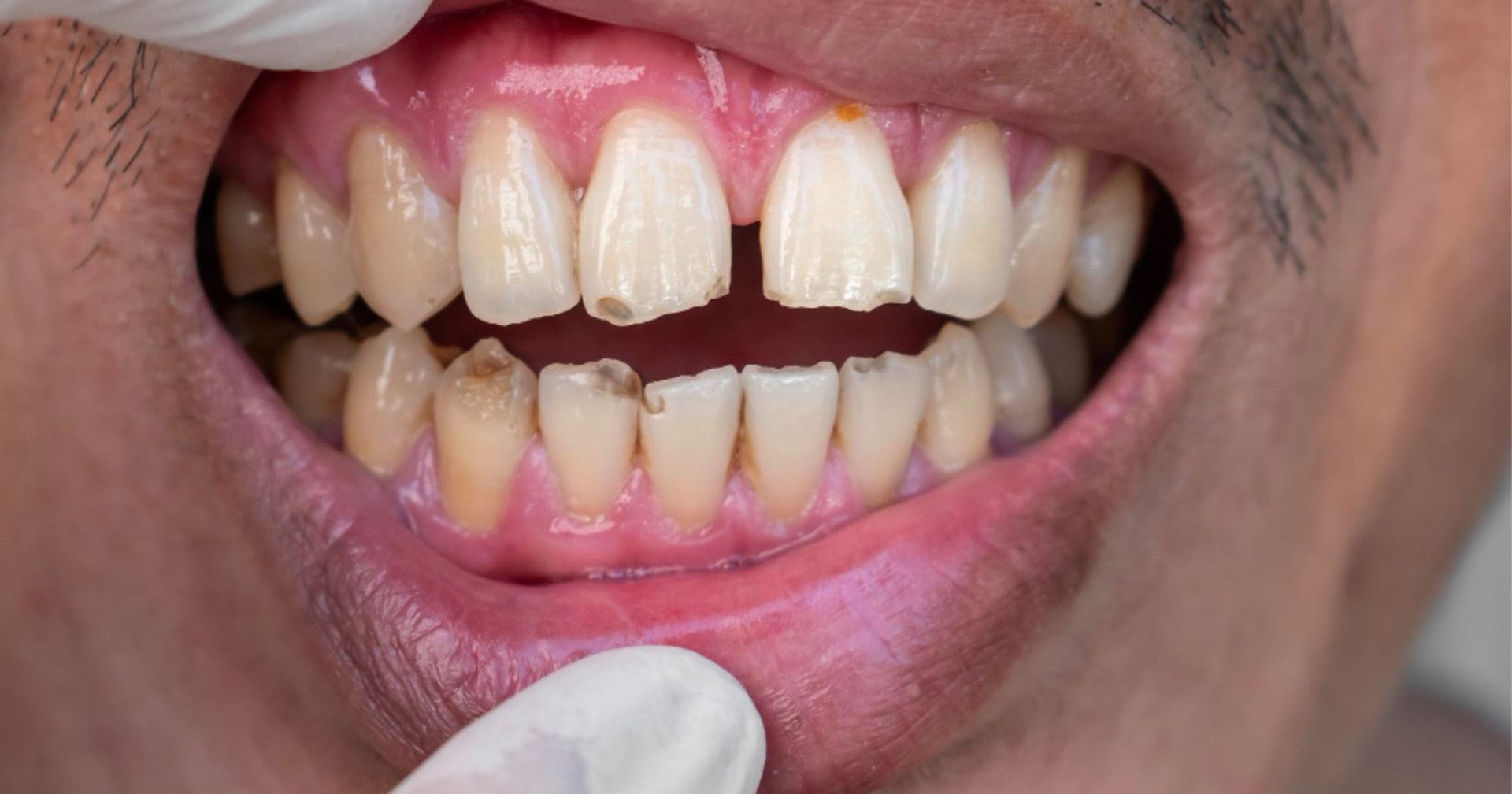


Receding gums happen slowly, which is why many patients don’t notice them until their teeth look longer or start to feel sensitive. Where the recession shows up and how it looks can give useful clues about the cause, and the cause is what decides what can be done.
This guide explains what receding gums are, the early signs, what different patterns of recession can point to, how recession is described by how far it goes, and what treatment can and cannot do. It is not a full guide to gum disease, which our related article covers.
This article is general information only. It is not a diagnosis. Only an examination can show why your gums have receded and what, if anything, is needed.
What are Receding Gums?
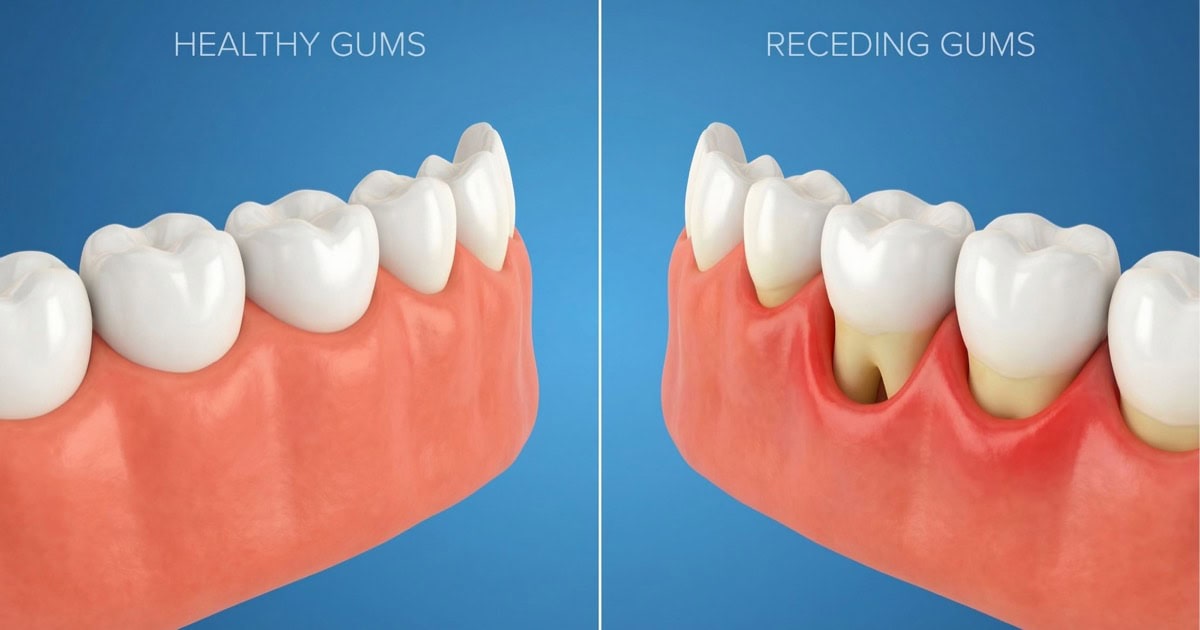
Gum recession is when the edge of the gum pulls back from the tooth, exposing more of it and, in time, the root. The root has no enamel covering, so it is more sensitive and more prone to decay.
Recession can affect one tooth or several. Once gum tissue has receded, it does not grow back on its own.
Early Signs of Receding Gums
- Teeth that look longer than before.
- A notch or ledge you can feel near the gumline.
- Sensitivity to cold, hot or sweet foods near the gum.
- A yellower, rougher area where the root has begun to show.
- A small gap where the gum has lowered.
Early recession often causes no symptoms at all. A dentist can notice things you cannot, such as gum edges that sit at different heights, areas of thin gum, or bleeding when the gums are measured. A regular check is the reliable way to catch it.
Why are My Gums Receding? Read the Pattern
Recession rarely has a single cause. The pattern can offer clues for you to discuss with your dentist, but it can’t tell you the cause on its own.
| What you notice | What may be contributing |
|---|---|
| Recession on the outer surface of a few teeth, often on one side, with a notch near the gumline | Heavy brushing pressure or technique |
| Recession with bleeding, swollen or tender gums, bad breath, or spaces opening between teeth | Gum disease |
| Recession on one tooth that sits forward or outside the line of the others | Tooth position and thin gum over that tooth |
| Recession next to a lip or tongue piercing, denture clasp or retainer | Rubbing or irritation from the appliance |
| Recession with flattened or chipped teeth, or a sore jaw on waking | Grinding or clenching |
| Mild recession across many teeth that runs in the family, despite careful cleaning | Naturally thin gum tissue |
| Recession in someone who smokes or vapes | Tobacco affecting gum health |
Many patients have more than one of these at once, and some have none that stand out. Our article on the stages of gum disease and treatment explains how gum disease can cause recession.
Receding Gums Stages: What Matters is How far it Goes
Dentists look at how far the gum has moved, and also at what has been lost around it. In general terms:
- Gum edge slightly lower. Little or no root shows, and there are often no symptoms. This is what patients usually mean by minor receding gums.
- Root exposed. The root is visible, and sensitivity or a notch may appear.
- Recession reaching the gum between the teeth. Small spaces appear between the teeth because the gum there has been lost.
- Recession with bone loss. The bone supporting the tooth is affected, and teeth may feel looser.
The further it goes, particularly once the gum between the teeth or the bone is involved, the less can usually be done to restore coverage. That is why finding recession early gives more options. Different teeth in the same mouth can be at different points.
What Your Dentist Checks
An assessment usually involves:
- Looking at the gum edge on each tooth and how it compares with its neighbours.
- Measuring the gum level and the depth of the gum pockets with a small probe.
- Checking for bleeding, swelling and loose teeth.
- Looking at how your teeth meet and for signs of wear from grinding.
- Taking X-rays, where appropriate, to see the bone supporting the teeth.
- Asking about your brushing, habits, tobacco use and family history.
These measurements also give a baseline so that changes can be tracked at later check-ups.
Can You Stop Receding Gums?
There is no guaranteed way to stop recession, but progress can often be slowed by dealing with what is driving it. If heavy brushing is a factor, gentler technique helps. If gum disease is involved, treating it comes first. If grinding or a rubbing appliance is involved, your dentist can address that.
Tissue that has already been lost does not regrow on its own. The aim is usually to stop it getting worse and to protect exposed roots.
Treatment Options for Receding Gums
Treatment depends on the cause and how far recession has gone. Options your dentist may discuss include:
- Addressing the cause. This could mean changing your brushing technique, treating gum disease, adjusting a rubbing appliance or protecting your teeth if you grind them.
- Professional cleaning. Removing plaque and tartar, with deeper cleaning below the gumline if gum disease is present. Our gum disease treatment page explains this in more detail.
- Protecting exposed roots. This can include fluoride, products for sensitivity or a tooth-coloured material over the exposed area.
- Gum grafting. In some cases, a surgical procedure where tissue is placed over an exposed root or to thicken thin gum may be discussed. It suits particular situations and is not needed for every case. Your dentist will explain whether it may be appropriate and who would provide it.
What Treatment Can and Can’t Do for Receding Gums
Treatment can help control the cause, protect exposed roots and, in some cases, improve the coverage or thickness of the gum. It cannot make lost gum tissue regrow by itself, and it cannot guarantee that recession will not continue.
Things to be aware of:
- Sensitivity can remain or come and go, even with treatment.
- Recession can continue if the cause is not dealt with.
- A graft carries its own risks, including discomfort, bleeding, infection, the graft not taking as hoped and further recession.
- A grafted area can look slightly different from the surrounding gum.
- Results depend on keeping the area clean and attending reviews.
Results vary between patients.
Receding Gums FAQs
Can receding gums happen on just one tooth?
Yes. A single tooth can recede because of local factors, such as its position, a rubbing appliance, a piercing or heavy brushing on that spot. Have it checked to find the cause.
Why do my gums recede more on one side?
Often it relates to habit or position. For example, brushing pressure can be heavier on one side, or a tooth may sit further out on one side. Your dentist can look at your gums, bite and brushing technique.
Do exposed roots decay more easily?
They can. Root surfaces have no enamel, so they are softer and more prone to decay and sensitivity. Your dentist can advise on protecting them.
Will I need a gum graft?
Not necessarily. Many patients only need monitoring and treatment of the cause. A graft is considered in particular situations, and your dentist will assess whether it applies to you.
Book a Gum Check in Prahran
Noticed your teeth looking longer, or sensitivity near the gumline? The next step is an examination.
At Prahran Family Dental, your dentist can check your gums, look for the cause of any recession, explain what they find and talk through your options before you decide on anything.
Call us on (03) 9533 2288 or book online to arrange a gum check. You can also read about gum disease treatment in Prahran.
We are at Shop 7, 180 Commercial Road, Prahran VIC 3181, and we see patients from Prahran, Windsor, South Yarra, Toorak and Armadale.
This article is general information and does not replace advice from a registered dental practitioner. All dental procedures carry risks. Results vary between patients. Ask your dentist whether treatment is appropriate for you.