Root Canal Therapy
Protect and preserve your natural tooth with gentle root canal therapy.
What Is Root Canal Therapy?
Root canal therapy is a treatment used to save a tooth that has become infected or severely inflamed on the inside. If bacteria reach the pulp through deep decay, cracks, or damage, infection may occur and, if left untreated, eventually lead to tooth loss.
Root canal treatment removes infected tissue, cleans the inner canals, and seals the tooth to maintain its function. In most cases, it is a conservative alternative to extraction.
When Is Root Canal Therapy Needed?
Root canal treatment may be recommended when the pulp inside the tooth is infected or cannot recover. Common causes include:
- Deep decay that has reached the nerve
- A dental abscess
- A cracked or fractured tooth that has allowed bacteria to enter
- Trauma to a tooth, even without visible damage
- An irreversibly inflamed dental nerve that will not settle on its own
Symptoms may include lasting sensitivity, pain while chewing, swelling around the gums, or changes in tooth colour. In some cases, there are no symptoms at all, and the issue is identified on an X-ray at a routine check-up.
What Does the Treatment Involve?
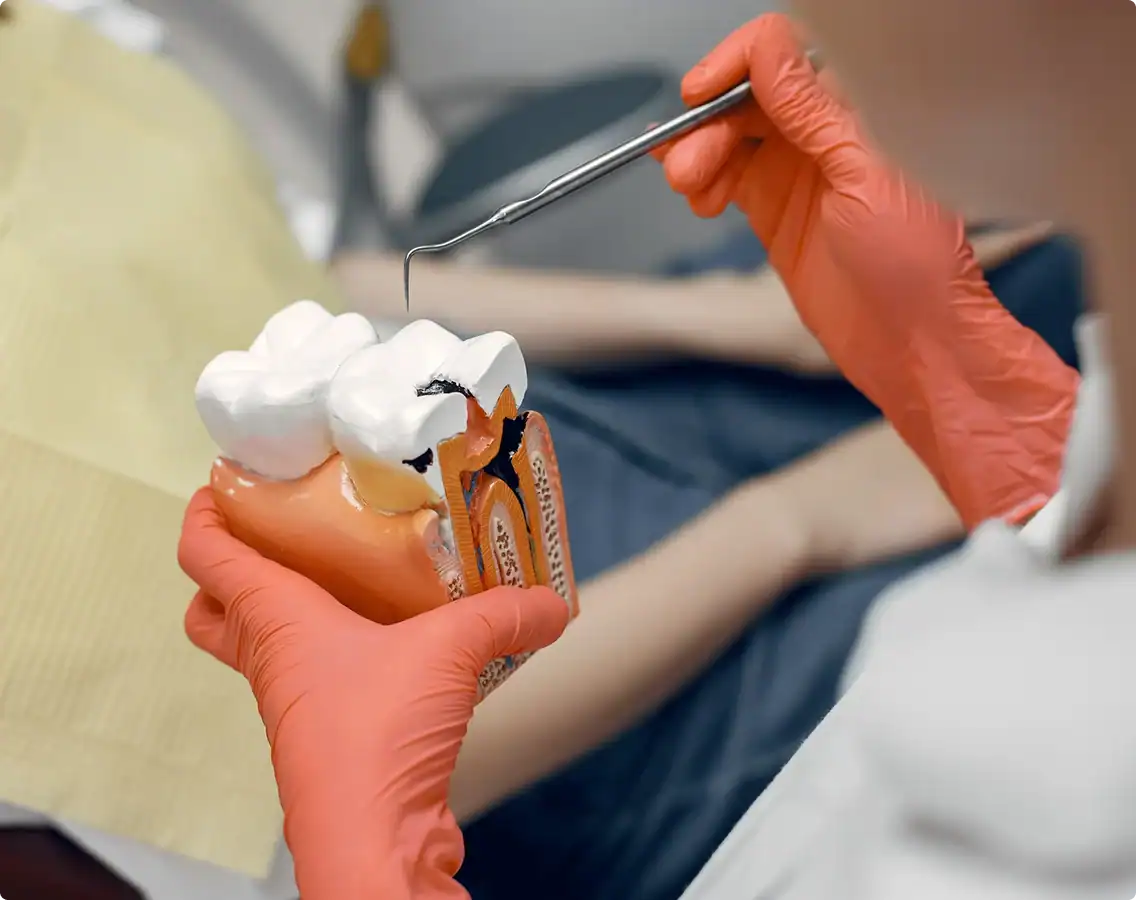
Despite common misconceptions, root canal therapy is usually no more uncomfortable than having a routine filling.
Step 1: Access and removal
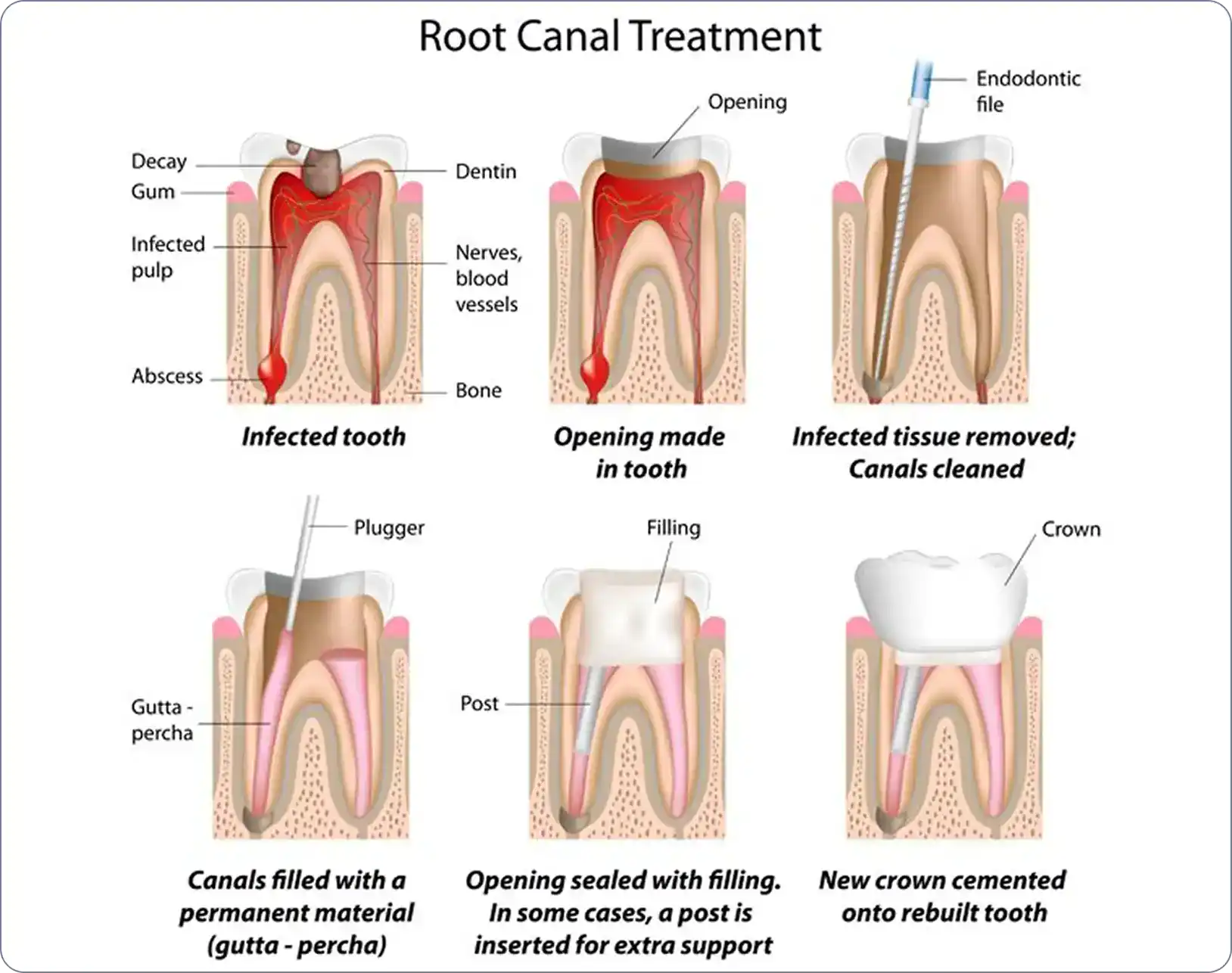
Dr Jun removes any decayed tooth structure and creates a small opening to access the root canal system. The infected nerve tissue and debris are removed from inside the canals.
Step 2: Cleaning and shaping
The canals are carefully cleaned, disinfected, and shaped to prepare them for filling. Depending on the severity of the infection, this may be completed in one appointment or across two.
Step 3: Filling and sealing
Once cleaned, the canals are sealed using a biocompatible filling material. A restoration — usually a filling — is placed on top to close the access point.
Step 4: Crown or onlay (where needed)
Molars treated with root canal therapy may be more prone to fracture under chewing pressure. In most cases, Dr Jun will recommend a dental crown or onlay to protect the tooth long-term. Front teeth may occasionally require internal bleaching if they have darkened following treatment.
Why Choose Prahran Family Dental for Root Canal Therapy
We use high-quality materials to ensure longevity and aesthetic excellence.

Gentle, Patient-Focused Approach
Root canal therapy is commonly believed to be painful, but modern dental care has made it a generally comfortable experience. The procedure is performed under local anaesthetic, and Dr Jun takes time to ensure you are fully numb and comfortable before beginning. Patients are routinely surprised by how manageable it is.

In-House Treatment, No Referral Needed
Most root canal cases are treated in-house at Prahran Family Dental. There is no referral to an endodontist for standard cases, which means faster treatment and no need to coordinate with a second provider.

Health Fund Friendly
Root canal therapy is generally covered under major dental insurance and private health insurance. We work with all major Australian health funds and direct HICAPS claims where possible. Speak with our team about your level of cover before your appointment.

Complete Care From Start to Finish
From diagnosis through to the final crown or restoration, your treatment is managed by Dr Jun at the same practice. You are not handed off between providers at different stages.
Aftercare & Restoration
After root canal therapy, back teeth often require a dental crown or onlay to protect the tooth from chewing forces.
In some cases, front teeth may require internal bleaching to improve appearance following treatment.
Frequently Asked Questions
Is root canal therapy painful?
The procedure is performed under local anaesthetic, so the area is numb throughout. Some tenderness and mild discomfort in the days following is normal as the tissue around the tooth settles. This is manageable with over-the-counter pain relief and typically resolves within a few days.
How many appointments does it take?
Most straightforward cases are completed in one or two appointments. More complex cases or those with significant infection may require an additional visit to ensure the canals are fully clear before sealing.
Is it better to just extract the tooth?
Saving a natural tooth is almost always preferable to extraction, where possible. Your natural tooth roots help maintain the jawbone and keep neighbouring teeth in position. Once a tooth is removed, the gap needs to be managed — often with a bridge or implant — which adds cost and complexity. Root canal therapy avoids all of that.
What happens after root canal treatment?
The tooth will need a restoration to properly seal it. For back teeth, this is usually a crown or onlay to protect against fracture. Dr Jun will discuss what is needed at your appointment. Once restored, the tooth can function normally and last many years with proper care.
Can a tooth become infected again after root canal treatment?
It is uncommon, but reinfection can occur in rare cases — usually if the seal is compromised or if canals were not fully treated the first time. If this happens, retreatment or a procedure called an apicoectomy may be considered. Dr Jun will discuss your options if this arises.
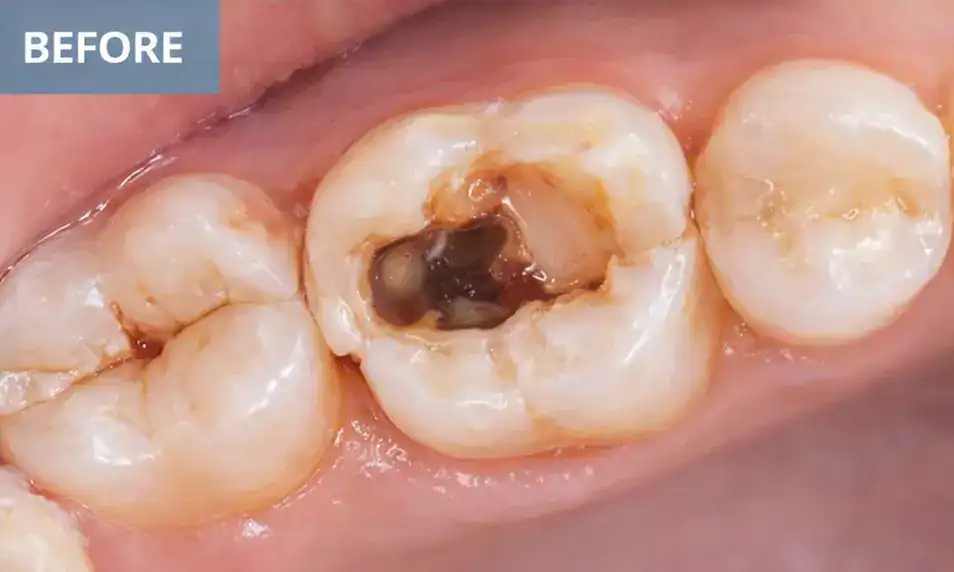
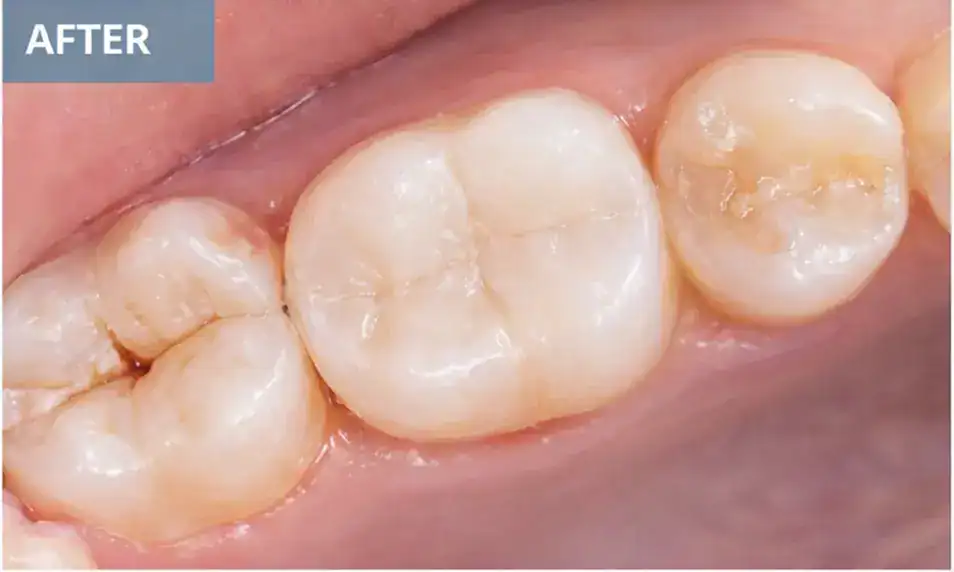
Witness the transformative power of our Precision-Crafted Root Canal Therapy