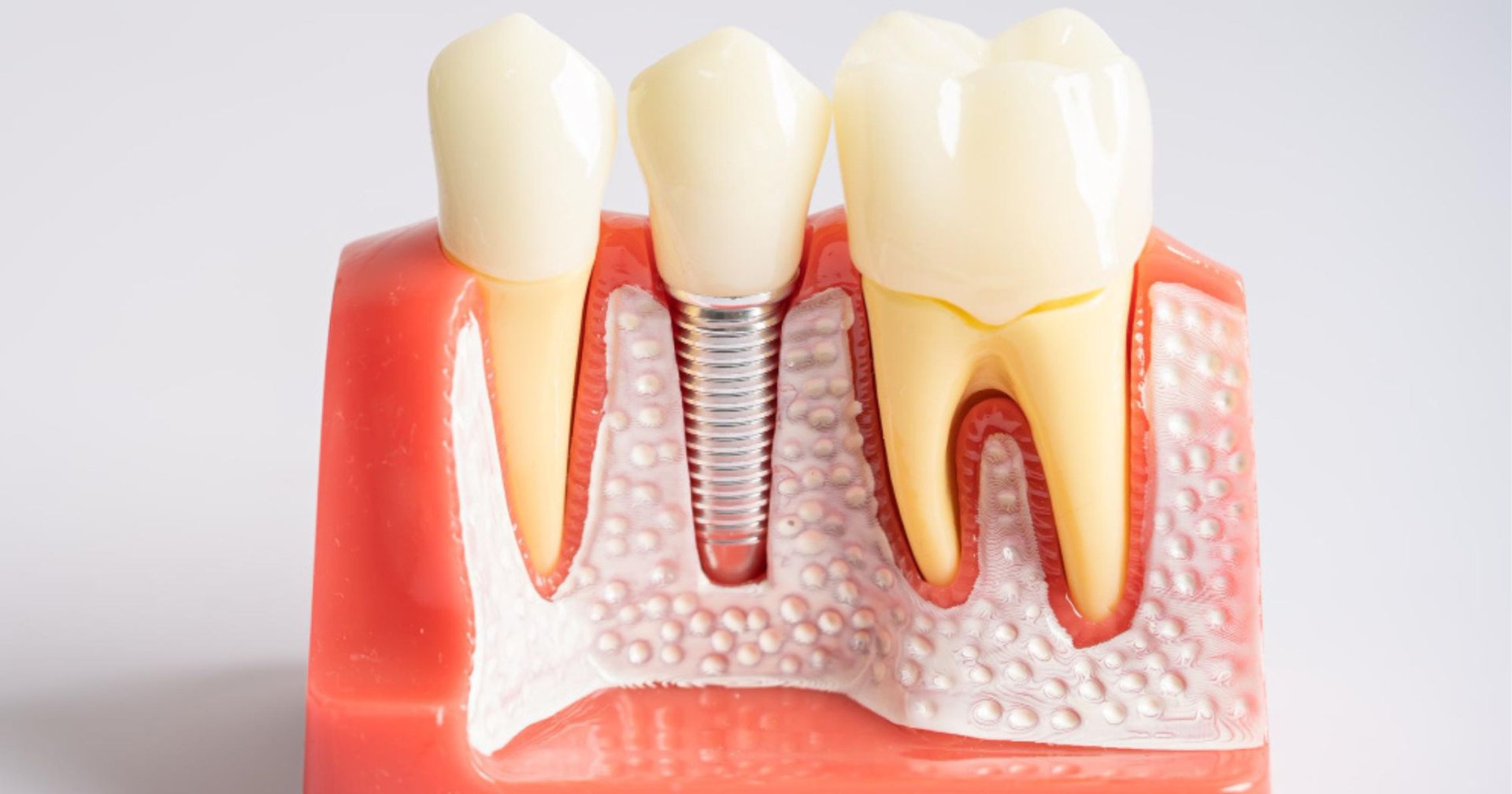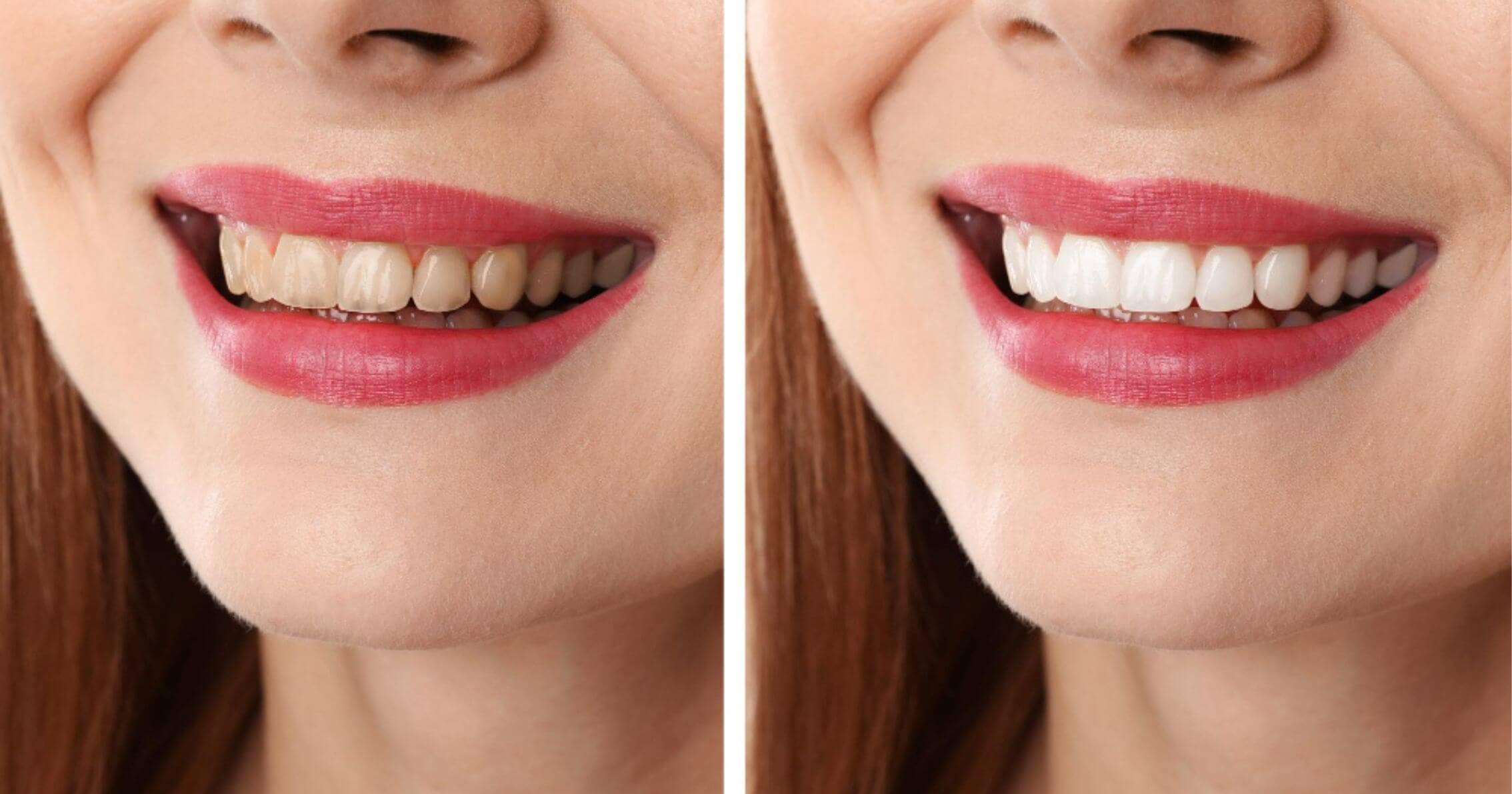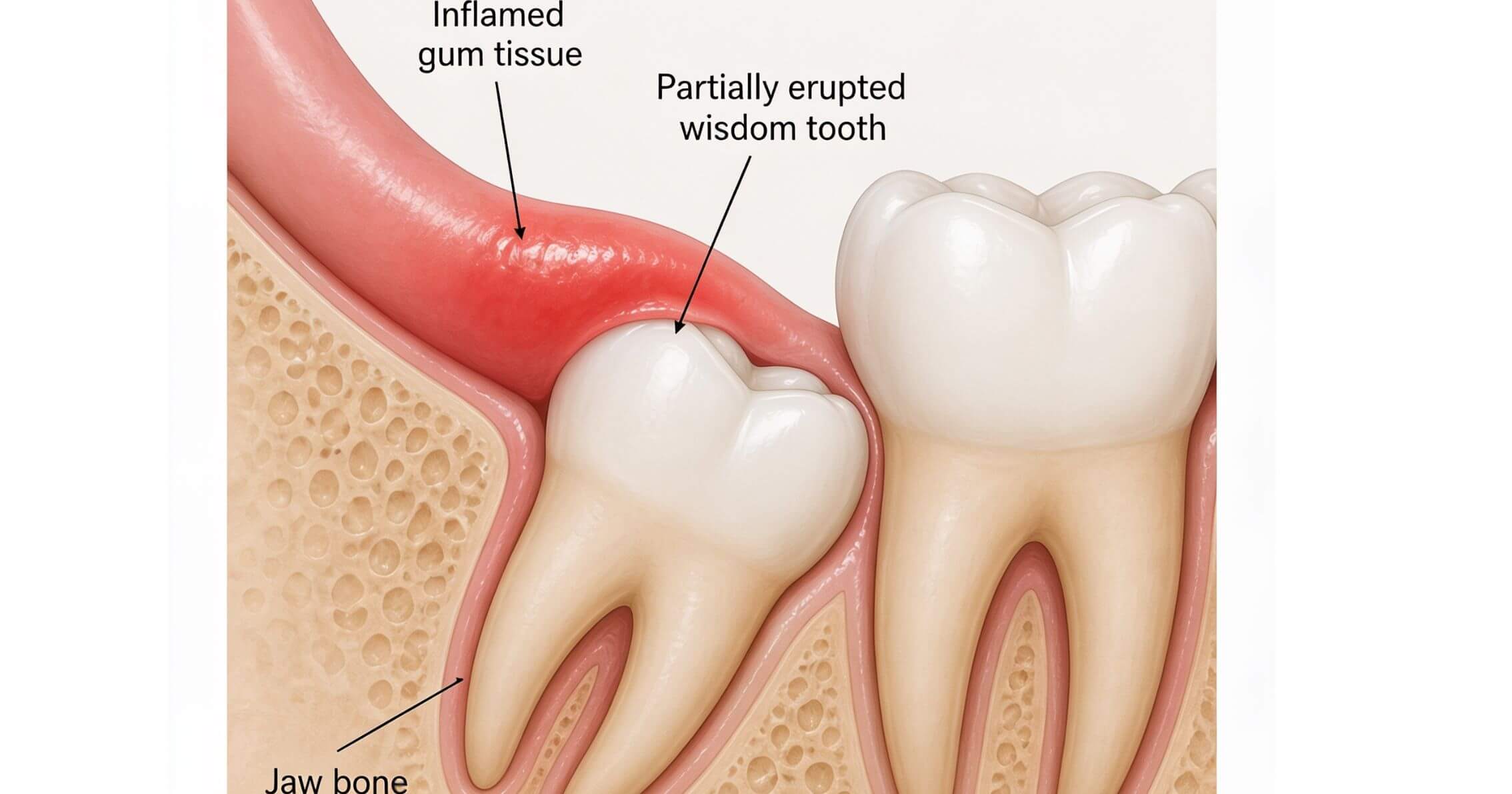


A dental crown is one of the standard ways to protect a tooth that's too damaged for a filling to hold reliably, but it isn't the only option, and knowing when it's actually the right call — rather than the default recommendation — makes it more useful to understand a treatment plan when one's suggested.
What a Crown Actually Is
Unlike a filling, which restores a particular area of the tooth, a crown covers the visible portion above the gumline. It restores the tooth's shape and function while protecting what remains of the natural structure underneath. Dental crowns are made from a few different materials — porcelain, zirconia, gold, or metal alloy among them — each with different strength and appearance characteristics, which your dentist can talk through for your specific tooth and its position in the mouth.
When You Actually Need One
A filling won't have enough tooth left to hold onto. When decay or a fracture has removed enough of the tooth's structure, a filling material doesn't have adequate support to stay in place reliably, particularly under the force of biting and chewing.
A cracked tooth. A crack that's affecting the tooth's structural integrity, or causing pain when biting, can be stabilised by a crown, which holds the tooth together under an external cap rather than relying on the cracked structure alone.
After root canal treatment. A tooth that's had root canal treatment is more prone to fracture over time, since it no longer has the blood supply that once kept it more resilient. A crown protects it going forward, particularly for back teeth under more biting force.
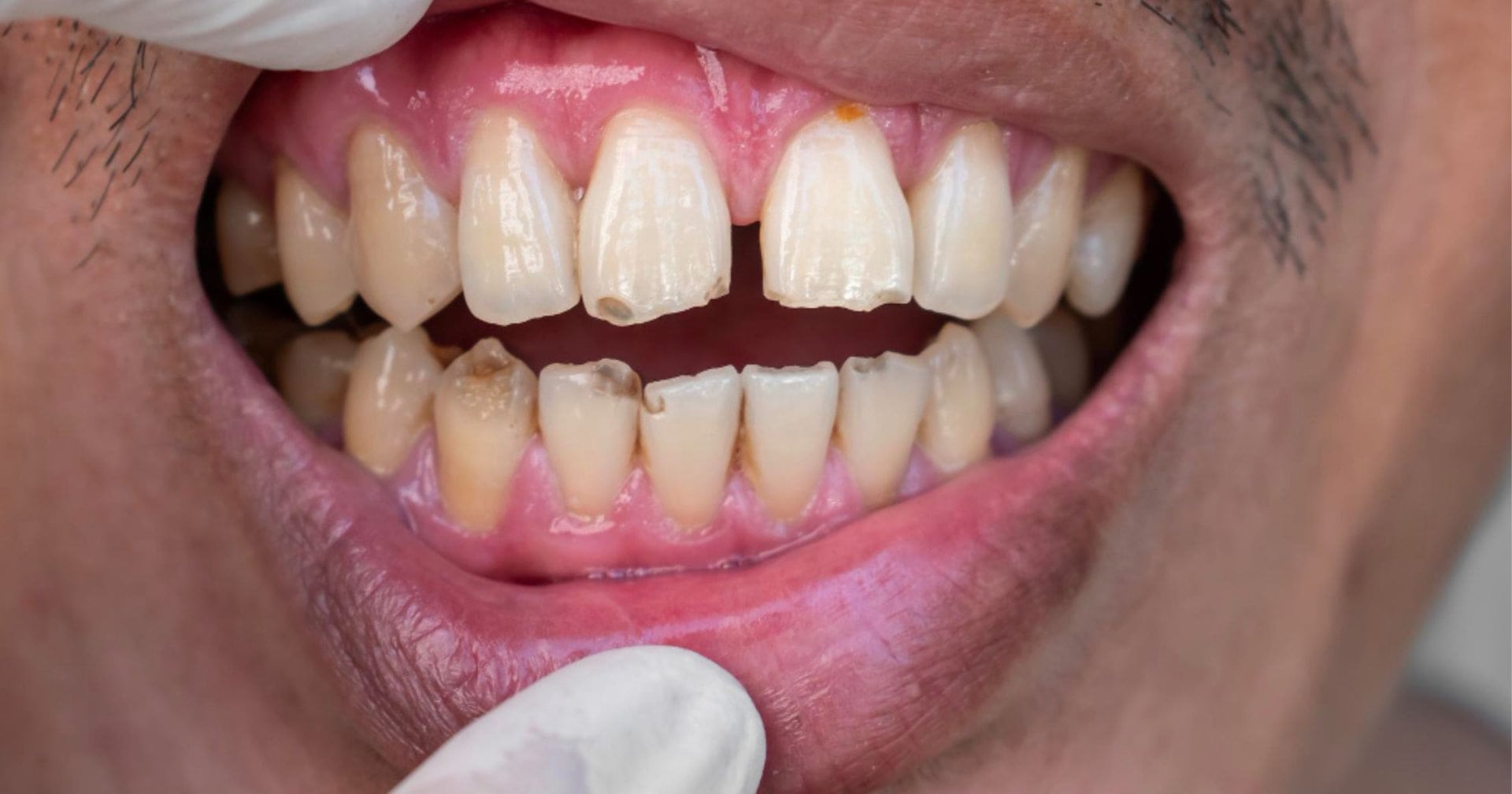
A significantly worn or misshapen tooth. Where wear, an old large filling, or the tooth's original shape is affecting function or appearance, a crown can rebuild the tooth's shape rather than adding onto an already compromised structure.
Cosmetic reasons, in some cases. A severely discoloured or misshapen tooth that hasn't responded well to other cosmetic options may be addressed with a crown, though this is one option among several and isn't automatically the first choice for a purely cosmetic concern.
Which of these applies — or whether a filling, onlay, or another option is more appropriate — is determined by an exam, not something to assume from symptoms alone.
Crown vs. Other Options
A crown isn't always the next step up from a filling. An onlay or inlay — a partial restoration that covers only the damaged portion of the tooth rather than the entire visible surface — is sometimes appropriate when there's more remaining healthy structure than a crown scenario requires, preserving more of the natural tooth.
A filling remains the right choice when there's enough healthy structure to support it. Your dentist weighs how much natural tooth structure remains, the location of the tooth, and the forces it's under to determine which of these actually fits your situation, rather than defaulting to a more extensive option than necessary.
The Process Step by Step
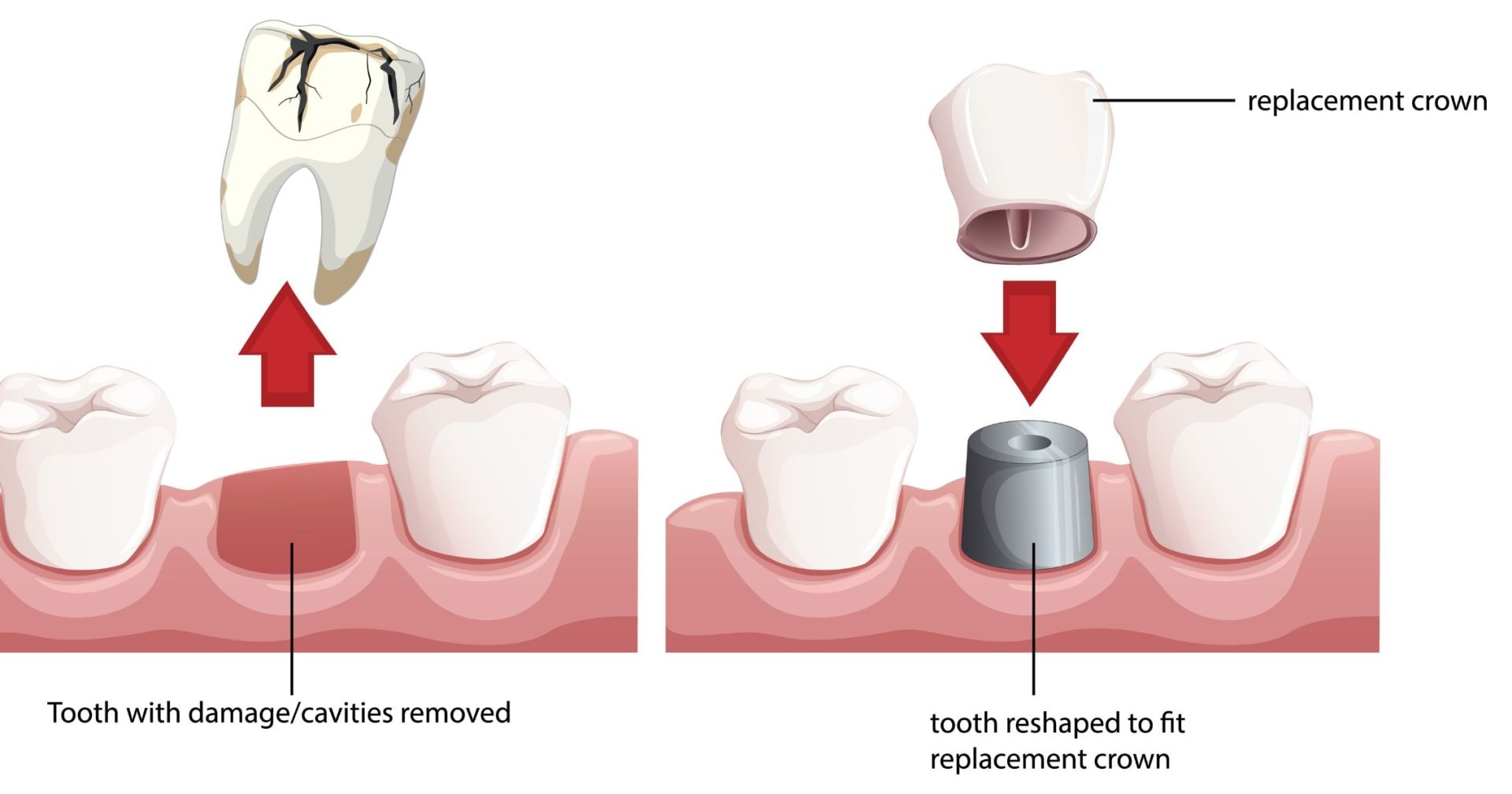
Assessment. An exam and an X-ray, where needed, confirm a crown is the appropriate option and check the tooth's and the surrounding structures' health.
Preparation. The tooth is reshaped to create space for the crown, and any decayed tooth structure is removed. An impression or digital scan is taken to guide the crown's fabrication.
Temporary crown. While the permanent crown is being fabricated at a dental laboratory, a temporary crown can cover and protect the prepared tooth.
Fitting. The permanent crown is checked for fit, shade, and bite, adjusted as needed, and cemented into place.
What to Expect During and After
Local anaesthetic is used during preparation to manage discomfort. Individual experiences vary, and some sensitivity to hot, cold, or pressure in the days following the appointment — particularly around the temporary crown stage — is a normal part of the tooth adjusting. Your bite is checked and adjusted at fitting so the crown doesn't sit higher than the surrounding teeth.
With the temporary crown in place, avoiding very sticky or hard foods on that side and being gentle when flossing around it reduces the chance of it coming loose before the permanent crown is fitted.
How Long Crowns Last
How long a crown lasts varies by material, the tooth's position and the forces it's under, and how well it's cared for. A large-scale study of general dental practice in England and Wales, covering approximately 1.2 million crowns (Lucarotti & Burke, British Dental Journal, 2018, nature.com/articles/sj.bdj.2018.523), found 77% of crowns had survived at 5 years, 63% at 10 years, and 53% at 15 years, with patient age and treatment need identified as factors influencing survival. This is real-world data from general practice rather than an idealised figure, and individual results vary — a crown isn't maintenance-free once it's placed. Regular check-ups are what allow your dentist to monitor it over time.
Risks and Limitations
A crown doesn't make the underlying tooth immune to future problems. Decay can still develop at the margin where the crown meets the natural tooth, particularly with inconsistent oral hygiene. Crowns can chip, come loose, or fail, which is part of why the longevity figures above aren't a guarantee for any individual crown.
Preparing a tooth for a crown also involves permanently reshaping it — this isn't reversible, and a prepared tooth will need a crown or another restoration going forward.
Frequently Asked Questions
How do I know if I need a crown instead of a filling?
Treatment options depend on the remaining healthy tooth structure and the underlying cause of the damage. A filling is appropriate when there's enough structure to support it; a crown is considered when there isn't, or when a tooth needs the additional protection a full-coverage restoration provides. An exam is what determines which applies to your tooth.
Does getting a crown hurt?
Local anaesthetic manages discomfort during preparation, and any sensitivity afterwards — especially around the temporary crown — is a normal part of the process. Individual experiences vary.
How long do dental crowns last?
Real-world data from a large study found 77% of crowns surviving at 5 years and 63% at 10 years — but it varies by material and how well it's cared for, and isn't a guarantee for any specific crown.
Can a tooth still get decay under a crown?
Yes — a crown covers the tooth, but decay can develop at the margin where it meets the natural tooth underneath, particularly with inconsistent oral hygiene. This is why check-ups still matter after a crown is placed.
What's the difference between a crown and an onlay?
A crown covers the visible portion of the tooth, while an onlay is used to restore a specific damaged area while retaining more of the natural tooth where possible. Which one applies depends on how much healthy structure remains, determined by an exam.
Dental Crowns in Prahran
If you've been told you may need a crown, or you'd like to understand your options before deciding, we're happy to talk it through.
At Prahran Family Dental, we see patients from Prahran, Windsor, South Yarra, Toorak, and Armadale.
Call us on (03) 9533 2288 or book online. Visit us at Shop 7, 180 Commercial Road, Prahran.
Any surgical or invasive procedure carries risks. Before proceeding, consider seeking a second opinion from an appropriately qualified health practitioner.