
A gap where a tooth used to be rarely stays just a gap. Chewing shifts to one side. Neighbouring teeth start to lean into the space. Over months and years, the jawbone underneath can lose density because nothing is stimulating it anymore. One way to replace a missing tooth from the ground up rather than just filling in the visible gap is with dental implants.
Here's how the treatment actually works, who tends to be a good fit, and what the process involves from first assessment to long-term care.
What Dental Implants Are and How They Work
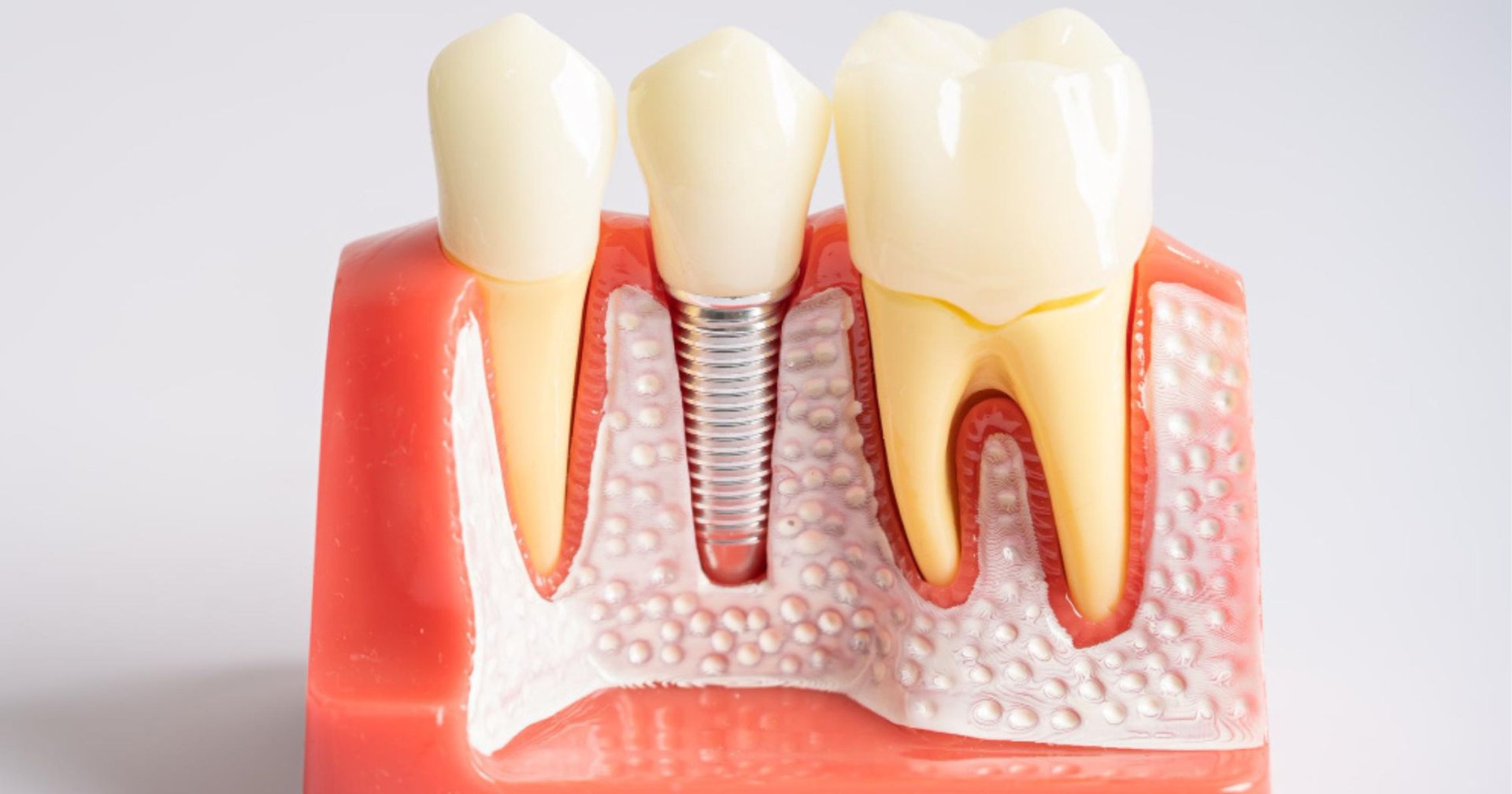
A dental implant has three parts. A small metal screw made of titanium goes into your jawbone to take the place of a missing tooth root. An abutment connects that post to the visible part of the tooth. A custom-made crown sits on top, shaped and coloured to match your surrounding teeth.
The reason implants are often discussed separately from bridges or dentures is that they replace the root, not just the crown. Over a period of months, the jawbone gradually fuses around the titanium post in a process called osseointegration.
Once that's happened, the implant has its own stable foundation in the bone, rather than relying on neighbouring teeth for support the way a bridge does.
This matters for long-term oral health. A tooth root does more than anchor a crown — it keeps signalling to the jawbone to maintain its density. When a tooth is lost, and nothing replaces the root, the bone in that area can gradually resorb. An implant is one way to keep that stimulation going.
Who Is a Good Candidate
Not everyone with a missing tooth is an immediate candidate for an implant, and that's a fair question to raise with your dentist rather than assume either way. Two things matter most: bone volume and gum health.
The jawbone needs enough width and height to support the post securely. If it's lost density since the tooth went missing, a bone graft may be recommended first to strengthen the region before implant placement.
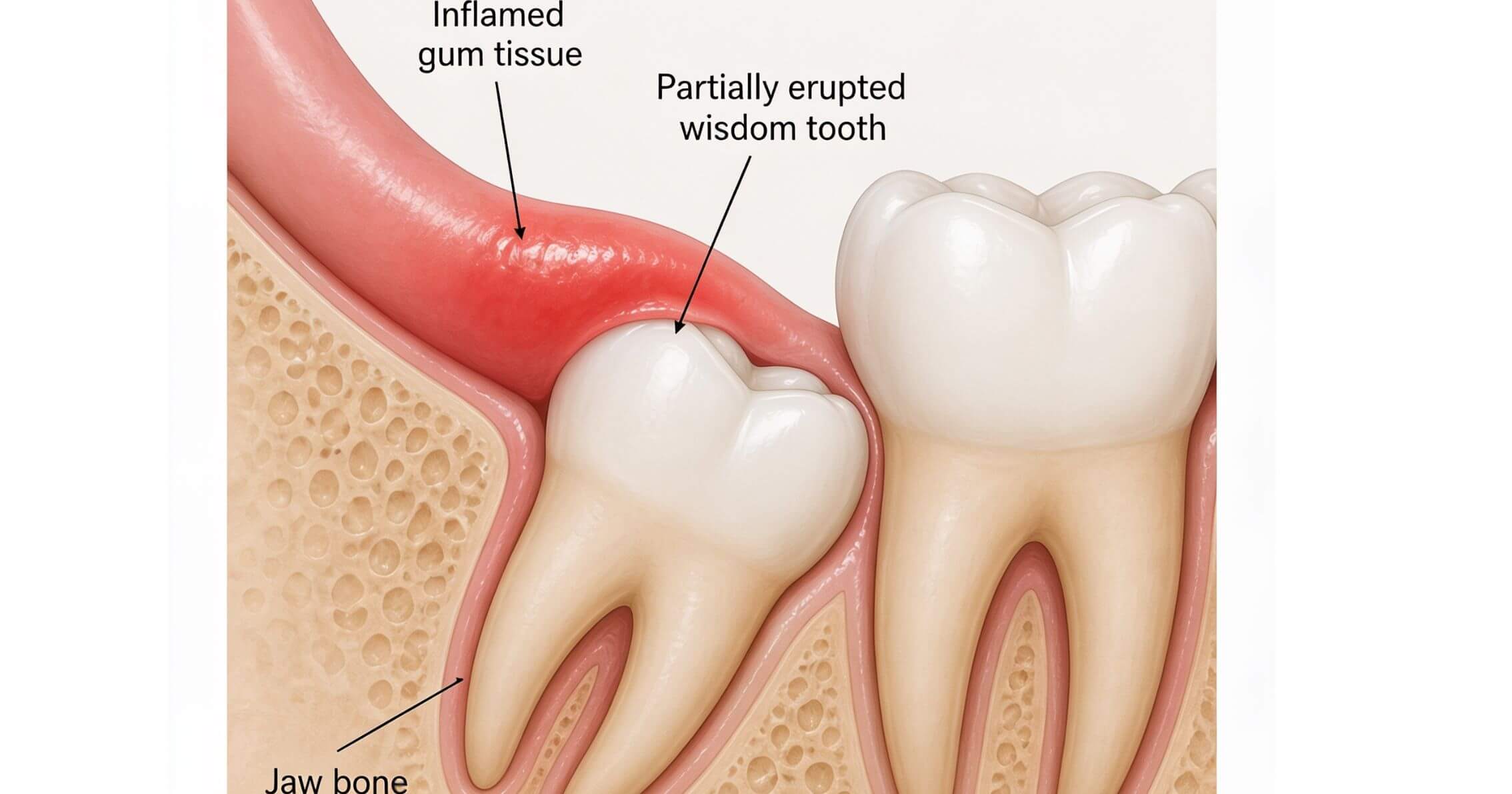
Gum disease also needs to be treated and stable before implant surgery, since healthy gum tissue is part of what keeps an implant secure long-term.
General health factors are part of the conversation too. Conditions like uncontrolled diabetes, certain medicines, and smoking can all affect healing and how well the implant integrates with the bone. How implants integrate varies between patients, which is part of why these factors are assessed individually rather than applied as a blanket rule. None of them automatically rule someone out, but they're the kind of thing your dentist needs to know about before recommending a treatment plan.
Like any surgical procedure, dental implant placement has some risks. These include infection and, in some cases, the implant not fully bonding with the jawbone. Your dentist can talk through what these risks mean for your specific case as part of your assessment.
An assessment, usually involving imaging of the jaw, is how this is actually determined — not something to self-diagnose from a checklist.
The Treatment Timeline Step by Step
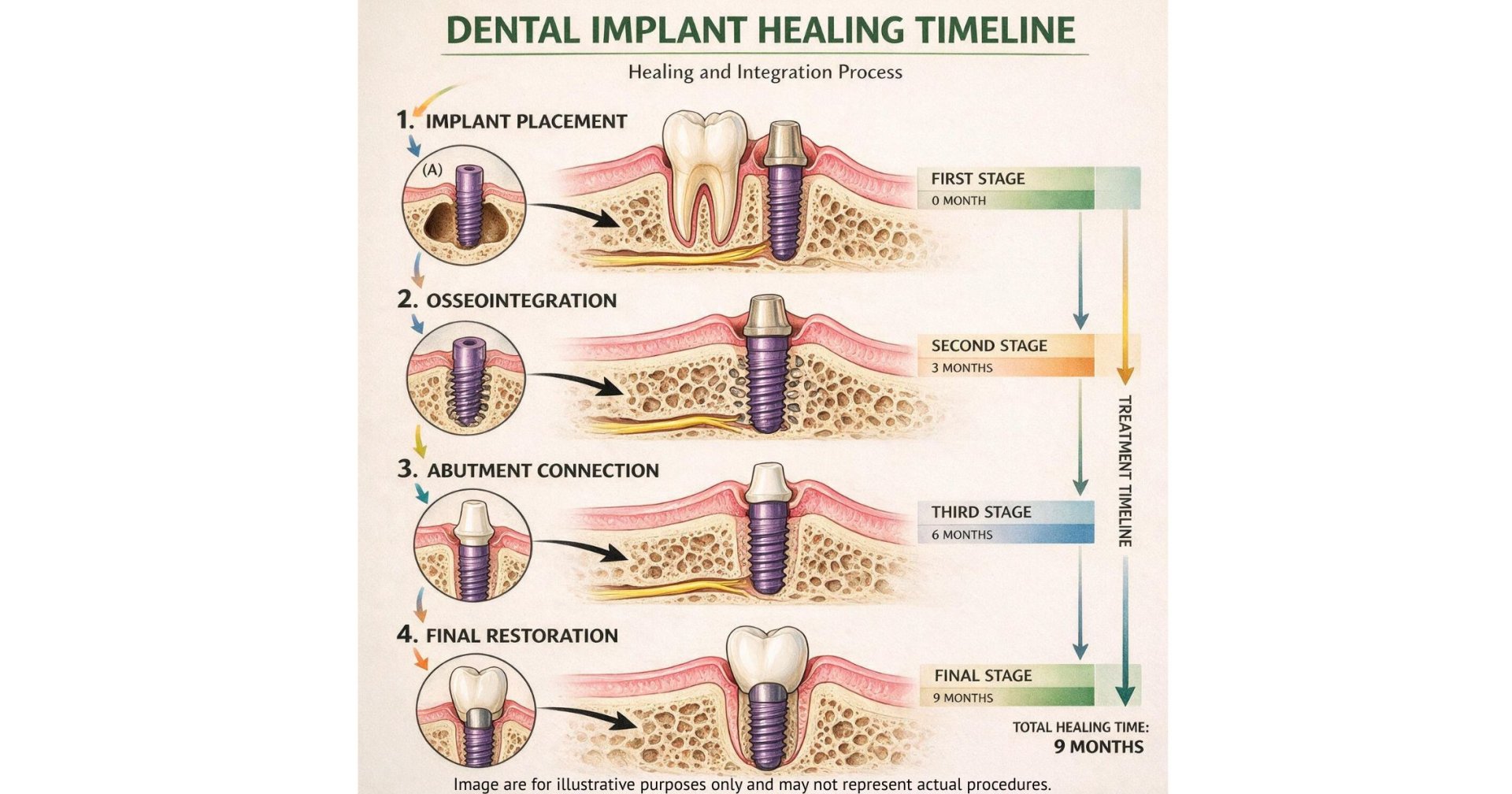
Implant treatment happens in stages, and the full process is measured in months rather than weeks.
Assessment and Imaging
Your dentist examines the site, checks gum health, and takes imaging to assess bone volume and plan the placement precisely. This is also when a bone graft would be identified as necessary, if needed.
Placement
The titanium post is surgically placed into the jawbone under local anaesthetic, which is used to manage discomfort during the procedure. Some swelling or soreness in the days afterwards is common, similar to other dental surgery, and this can usually be managed with the recommended pain relief.
Healing
This is the osseointegration stage, where the bone fuses around the implant. Healing time varies from person to person and depends on factors like bone quality and whether grafting was involved. A temporary option, such as a denture or bridge, may be used during this period if the gap is visible or affects chewing.
Final Crown
Once the implant has fully integrated, a custom crown is fitted on top. This custom tooth is crafted to look like your natural teeth, completing the final step to fully restore your smile's appearance and chewing power.
Timeframes vary between patients, and your dentist can give you a realistic estimate once your specific situation has been assessed — general timelines online are a guide only, not a prediction for your case.
What Affects the Cost
We're not going to list figures here, because they depend entirely on individual circumstances. Still, it's worth understanding what actually drives the cost of implant treatment so a quote makes sense when you get one.
The number of implants needed is the starting point — a single tooth is a different scope of work to multiple implants or a full arch.
Whether bone grafting is required adds another stage of treatment and healing time. The materials used for the crown and abutment also vary in cost. Any additional procedures, such as extracting a damaged tooth before the implant can be placed, also factor in.
Because of this, the only accurate way to understand cost is a consultation and assessment specific to your mouth. Many private health funds offer some level of cover for implant treatment, though this varies by policy, so it's worth checking your level of cover before your appointment.
Caring for Implants Long Term
An implant is cared for much like a natural tooth, with a few specifics worth knowing.
Brushing every day and cleaning carefully around the implant and gumline help prevent peri-implantitis, an inflammatory condition that can affect the tissues supporting the implant if left untreated. Interdental brushes or floss designed for implants can help reach areas a standard toothbrush might miss. Regular dental check-ups let your dentist monitor the implant and surrounding gum tissue over time.
A few things can shorten how well an implant holds up: inconsistent oral hygiene, untreated gum disease, smoking, and teeth grinding that isn't managed with a nightguard. With consistent care, implants are designed to be a long-term option for tooth replacement, though how long any individual implant lasts depends on these factors and varies between patients — your
Prahran dentist can talk through what to expect based on your situation.
Frequently Asked Questions
What is a dental implant?
A titanium implant fixture replaces the missing tooth root and, following osseointegration, supports a custom-fabricated crown.
Am I a good candidate for a dental implant?
Whether you're a suitable candidate depends on your bone and gum health, which can only be assessed by a dentist. It's not something you can determine on your own.
Are dental implants painful?
Placement is done under local anaesthetic to manage discomfort, and mild soreness afterwards is common. Your dentist can talk you through what to expect for your case.
How much do dental implants cost?
There's no set figure — it depends on your specific treatment plan, so a consultation is the only way to get an accurate quote.
How long does the whole implant process take?
Treatment typically takes several months from implant placement to fitting the final crown, allowing time for the implant to integrate with the jawbone. Your dentist can give you a timeframe once you've been assessed.
Considering Dental Implants in Prahran?
If you're weighing up dental implants and want to know whether you're a suitable candidate, an assessment is the only way to get a straight answer for your situation.
Book a consultation with Prahran Family Dental — call us on (03) 9533 2288 to arrange yours at Shop 7, 180 Commercial Road, Prahran. We also see patients from Windsor, South Yarra, Toorak and Armadale.
Any surgical or invasive procedure carries risks. Before proceeding, consider seeking a second opinion from an appropriately qualified health practitioner.