Inlays & Onlays
A strong, natural-looking alternative to fillings for restoring damaged back teeth.
What Are Inlays and Onlays?
These are custom-made restorations designed for teeth that need more support than a filling can provide, but not enough to require a crown. They are made in a dental laboratory from high-quality materials and precisely fitted to the prepared tooth, resulting in a stronger, more durable, and better-fitting restoration than a chairside direct filling.
The difference between the two comes down to how much of the tooth they cover. An inlay sits inside the biting surface of the tooth, filling the space left after damaged tooth structure is removed.
An onlay extends further, covering one or more cusps, and is used when the damage is more widespread but the tooth structure as a whole is still sound enough to be preserved.
When Are Inlays or Onlays Recommended?
When a filling may not provide enough support, but the tooth does not need full coverage, an inlay or onlay may be advised. They are most commonly used on the back teeth, where biting forces are strongest.
Common situations where an inlay or onlay may be the right choice include:
- Teeth with moderate to large cavities
- Teeth with existing fillings that have cracked, worn, or failed
- Fractured teeth where the damage does not extend to the gum line
- Teeth where preserving as much natural structure as possible is the priority
Types of Materials We Use
The material used depends on the tooth's location and your aesthetic preferences. Dr Jun will recommend the most suitable option at your appointment.

Porcelain
Closely matches the natural colour of teeth. A good aesthetic choice for teeth that are visible when you smile or speak.

Zirconia
Highly durable and natural-looking. Suits both visible and back teeth and handles biting forces well.

Gold
Extremely strong and long-lasting, and gentle on the opposing teeth. Often, the preferred clinical choice for back molars.

Semi-precious metal
A gold alloy blend offering good strength and durability.

Non-precious metal
Silver in colour and highly durable, suited to cases where longevity is the priority.
What to Expect
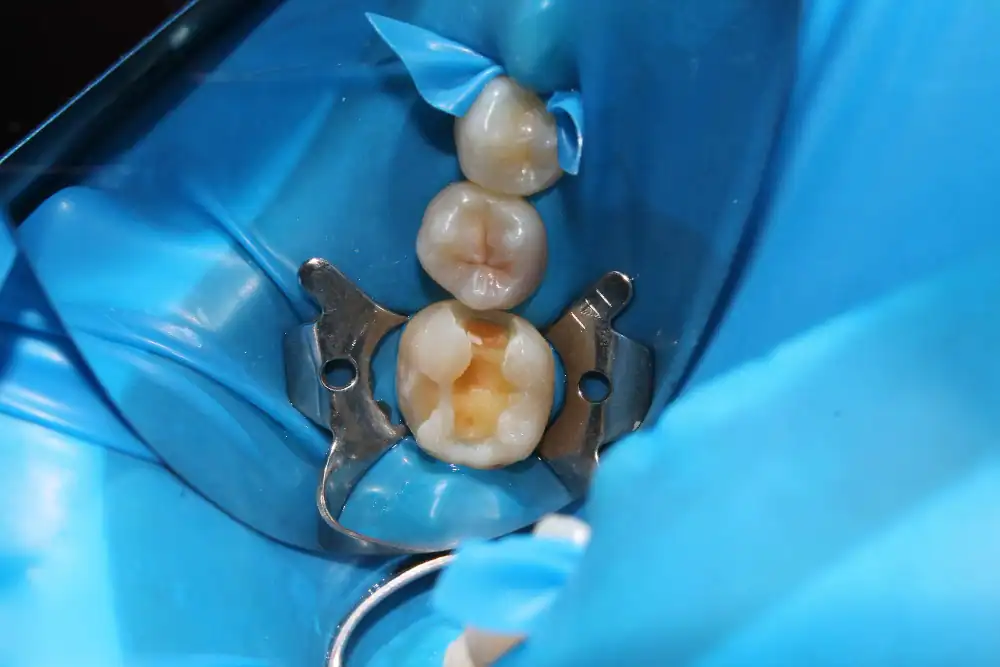
Like crowns, inlays and onlays require two appointments. During the initial appointment, the tooth is carefully prepared, impressions are sent to the dental laboratory, and a temporary restoration is placed in the meantime.
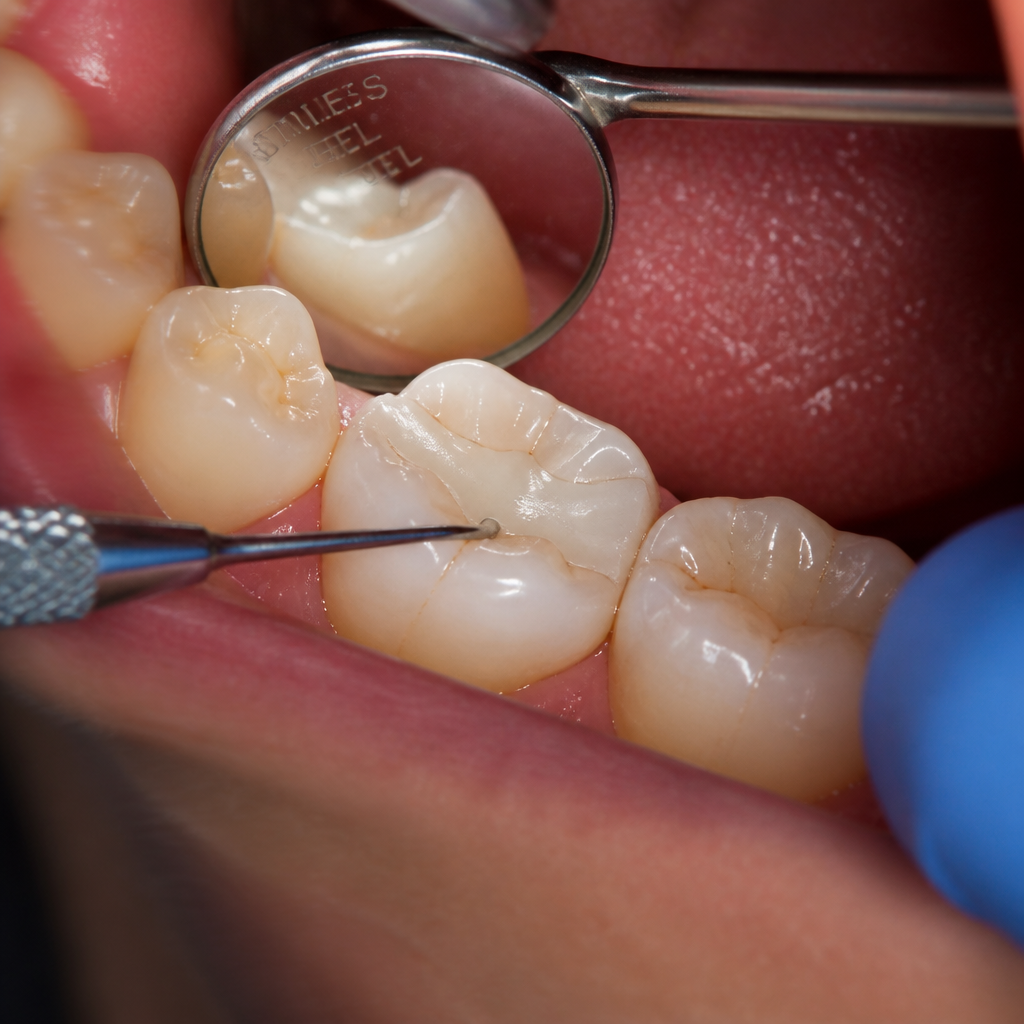
Your permanent restoration is fitted, assessed for bite and comfort, and securely bonded during the follow-up appointment.
Once fitted, an inlay or onlay is very stable and should feel comfortable and natural straight away.
Why Choose Prahran Family Dental for Inlays & Onlays
A Conservative Approach to Restoration
Inlays and onlays allow more of the natural tooth to be preserved compared to a crown. Where this option is clinically appropriate, Dr Jun will recommend it — the goal is always to keep as much of your natural tooth as possible.
Laboratory-Made for Precision
Every inlay and onlay is custom-fabricated in a highly skilled and experienced dental laboratory, not placed directly in the chair. This means a more precise fit, better contact with neighbouring teeth, and a more durable result than a standard filling.
Health Fund Friendly
We work with all major Australian private health funds and direct claim where possible. Speak with our team about your level of cover before your appointment.
Clear Costs Upfront
A written quote will be provided before treatment begins so you know what to expect.

Frequently Asked Questions
What is the difference between an inlay and a filling?
A filling is placed directly into the tooth in a single appointment using a soft material that sets in place. An inlay is made in a laboratory from a harder material — porcelain, zirconia, or metal — and bonded into the tooth at a second appointment. Inlays are generally stronger, more durable, and better fitting than direct fillings, particularly for larger restorations on back teeth.
What is the difference between an onlay and a crown?
A dental crown encases the whole tooth above the gumline for full coverage and protection. An onlay only covers the damaged portion of the biting surface, including one or more cusps, while leaving the remaining healthy tooth structure untouched. Where an onlay is appropriate, it is the more conservative option.
Are inlays and onlays painful to have fitted?
The procedure is carried out under local anaesthetic so that the area will be numb throughout. Some sensitivity in the days following is normal and settles quickly.
How long do inlays and onlays last?
With good oral hygiene and regular check-ups, inlays and onlays can last many years. The lifespan depends on the material used, the tooth's location, and your bite.
Can I eat normally afterwards?
Yes, once the permanent restoration is bonded in place. We may advise you to be careful with the temporary restoration between appointments — avoid hard or sticky foods on that side until the permanent piece is fitted.
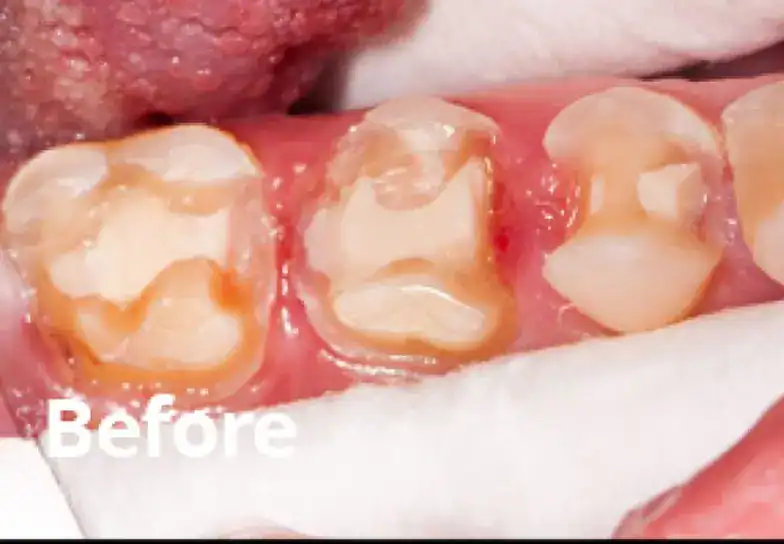
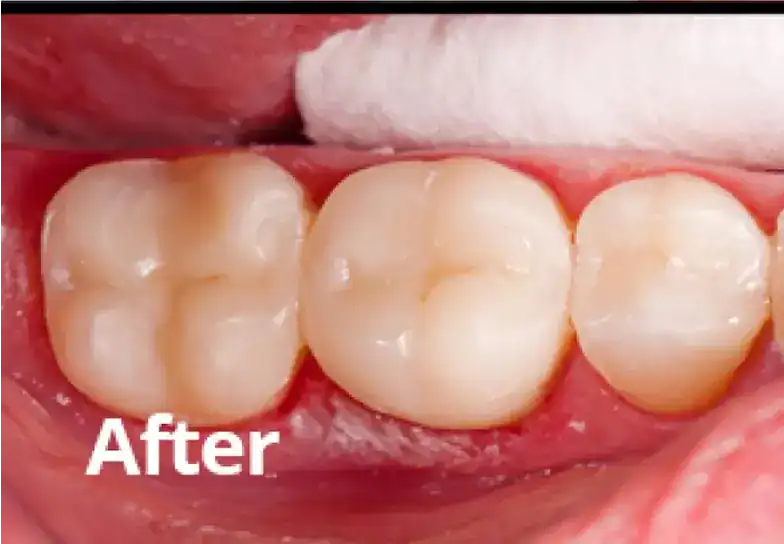
Real Results: Before & After
Witness the transformative power of our Precision-Crafted Inlays & Onlays